Guide · Drivetrain
Cassette and Freehub Compatibility: HG, Micro Spline, XD/XDR, and N3W
Identify your wheel's installed driver, match the cassette interface, and check documented spacer, adapter, and drivetrain requirements.
By BikePartPicker Editorial
Published · 5 min read
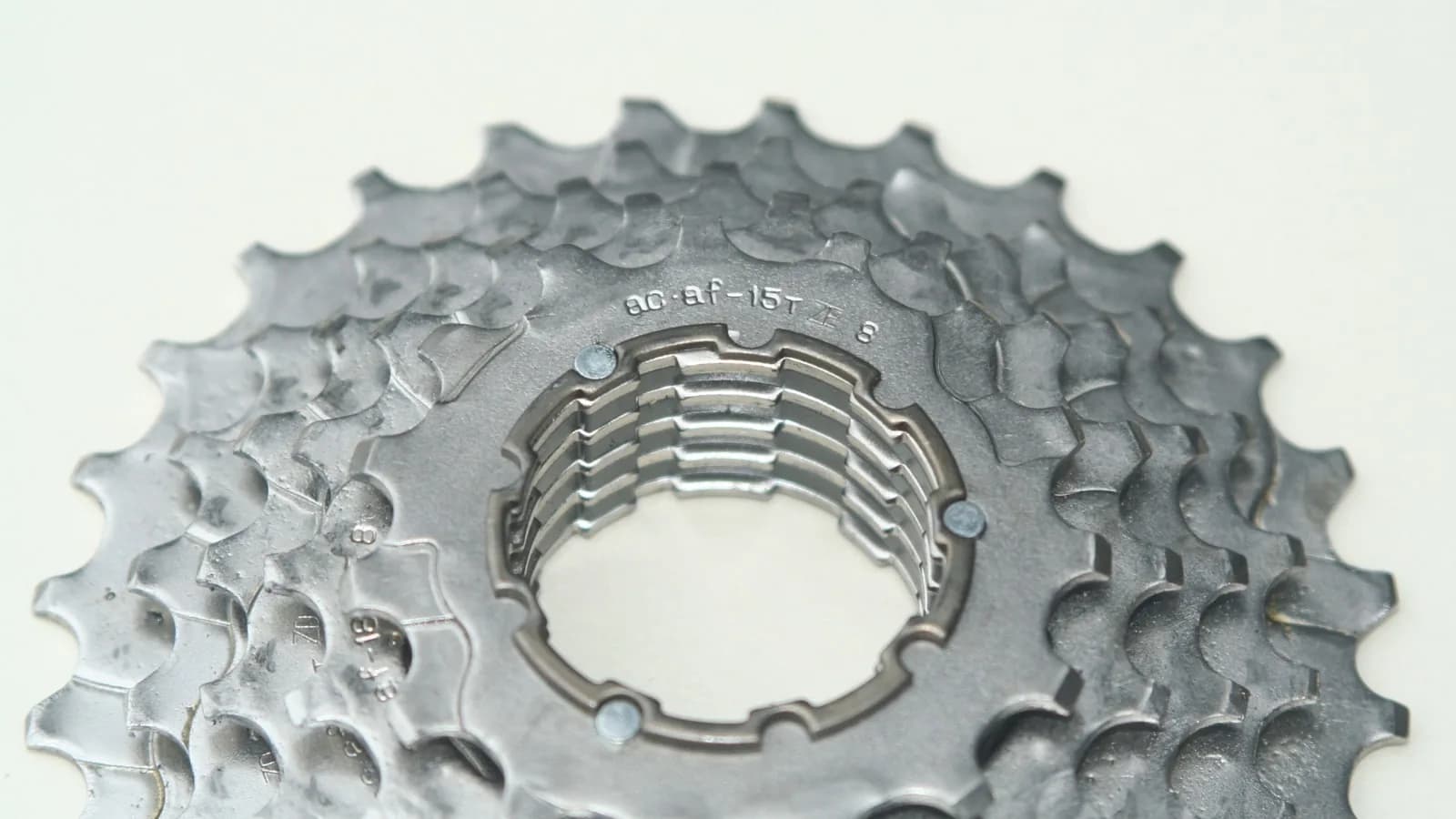

A cassette can have the right number of sprockets and still be wrong for the wheel. First identify the driver installed on the rear hub. Then check the exact cassette, any required spacer or adapter, and the rest of the drivetrain.
Use this order:
- Identify the rear wheel or hub and the driver that is actually installed.
- Match the cassette's documented mounting interface.
- Follow the exact spacer, lockring, or adapter instructions.
- Confirm the shifter, derailleur, chain, and cassette range as a complete system.
Identify the Installed Driver
Do not identify a driver from the bike brand, wheel brand, or speed count alone.
Many rear hubs accept more than one replaceable driver body. That option list does not prove what is on your wheel. Check the exact wheel variant, purchase record, markings, or hub manufacturer's identification instructions.
The interface's shape is useful, but body length matters too. Shimano's current compatibility document distinguishes several HG spline lengths in addition to Micro Spline. XD and XDR share a profile but have different lengths.
Compare the Mounting Interfaces
This table is a starting point, not a substitute for the exact cassette and wheel documentation.
| Driver family | What distinguishes it | Core mounting rule |
|---|---|---|
| HG spline L2 | Shimano's road 12-speed-dedicated spline pattern | Use only cassettes that Shimano documents for HG spline L2. |
| HG spline L | Shimano's road body for documented 12/11-speed and older cases | Check the exact cassette row and its model-specific spacer footnotes. |
| HG spline M | Shimano's shorter HG body | Shimano documents current 10/9/8/7-speed and MTB 11-speed cases, subject to its table notes. |
| Micro Spline | Fine 23-spline Shimano interface | Used for documented Shimano 12-speed MTB cassettes and current 1x12 gravel applications. |
| XD | Shorter SRAM threaded driver interface | Use a cassette documented for XD. |
| XDR | XD profile with 1.85 mm additional length | XDR cassettes require XDR. XD cassettes can use XDR with SRAM's 1.85 mm spacer. |
| N3W | Campagnolo groove profile on a body 4.4 mm shorter than the classic body | Newer cassettes can mount directly; older supported cassettes use the documented N3W adapter path. |
The current Shimano compatibility information provides the HG and Micro Spline table. SRAM documents the XD/XDR length and spacer relationship and publishes a separate cassette installation compatibility chart. Campagnolo's N3W documentation explains the shorter body and adapter concept.
Understand the XD and XDR Spacer Rule
XDR is 1.85 mm longer than XD. SRAM documents that an XD cassette can mount on an XDR driver when the 1.85 mm spacer is installed behind the cassette.
That rule is directional. SRAM's current cassette manual states that XDR cassettes are compatible only with XDR. Do not remove the length difference from the explanation and conclude that every XD/XDR combination works.
Check the exact cassette model. SRAM's manual also distinguishes XG, XS, PG, and special driver cases. The family name gets you to the right chart, not to a universal answer.
Treat N3W as Its Own Decision
N3W keeps Campagnolo's groove profile but shortens the body by 4.4 mm. Campagnolo introduced it to support cassettes with smaller starting sprockets while retaining a documented adapter path for older supported cassettes.
Do not reduce that to “all Campagnolo fits.” Confirm the exact cassette, the installed N3W body, and whether the required adapter is present. Current cassette and wheel manuals should decide the model-level result.
A Driver Swap Is Hub-Specific
Some hubs make a driver conversion straightforward. Others require a particular driver kit, axle or end-cap arrangement, or are not offered in the interface you need.
Only the wheel or hub manufacturer can establish that conversion path. A generic XD, XDR, Micro Spline, or N3W body is not automatically interchangeable across hubs.
Check:
- the exact hub or wheel model and generation
- the manufacturer's compatible driver kit
- required end caps, axle parts, seals, or spacers
- whether the kit changes dish, spacing, or service requirements
- whether the resulting driver matches the cassette documentation
If the exact conversion is not documented, leave it unresolved.
Mounting Is Not Full Drivetrain Compatibility
A cassette that seats correctly can still be wrong for the shifter, derailleur, chain, or supported cog range.
Speed count alone does not settle those relationships. Current manufacturer compatibility charts identify exact families and exceptions. Check the complete path before buying the cassette or converting the wheel.
That distinction is part of the broader bike-parts compatibility framework: physical fit, system operation, manufacturer support, and evidence confidence are separate questions.
Before You Buy
- Identify the installed driver, not just the wheel's available options.
- Find the exact cassette model in current manufacturer documentation.
- Confirm direct mounting and every required spacer, adapter, and lockring.
- Verify any driver conversion against the exact hub.
- Check shifter, derailleur, chain, and range support.
- Stop if a required identity or source is missing.
You can browse current cassettes and wheelsets in the catalog, then start a build to keep the driver and drivetrain decisions together.