Guide · Compatibility
Bottom Bracket and Crank Compatibility Explained
Match a bicycle frame shell, bottom bracket, crank spindle, spacer setup, and chainline without relying on one misleading measurement.
By BikePartPicker Editorial
Published · 4 min read
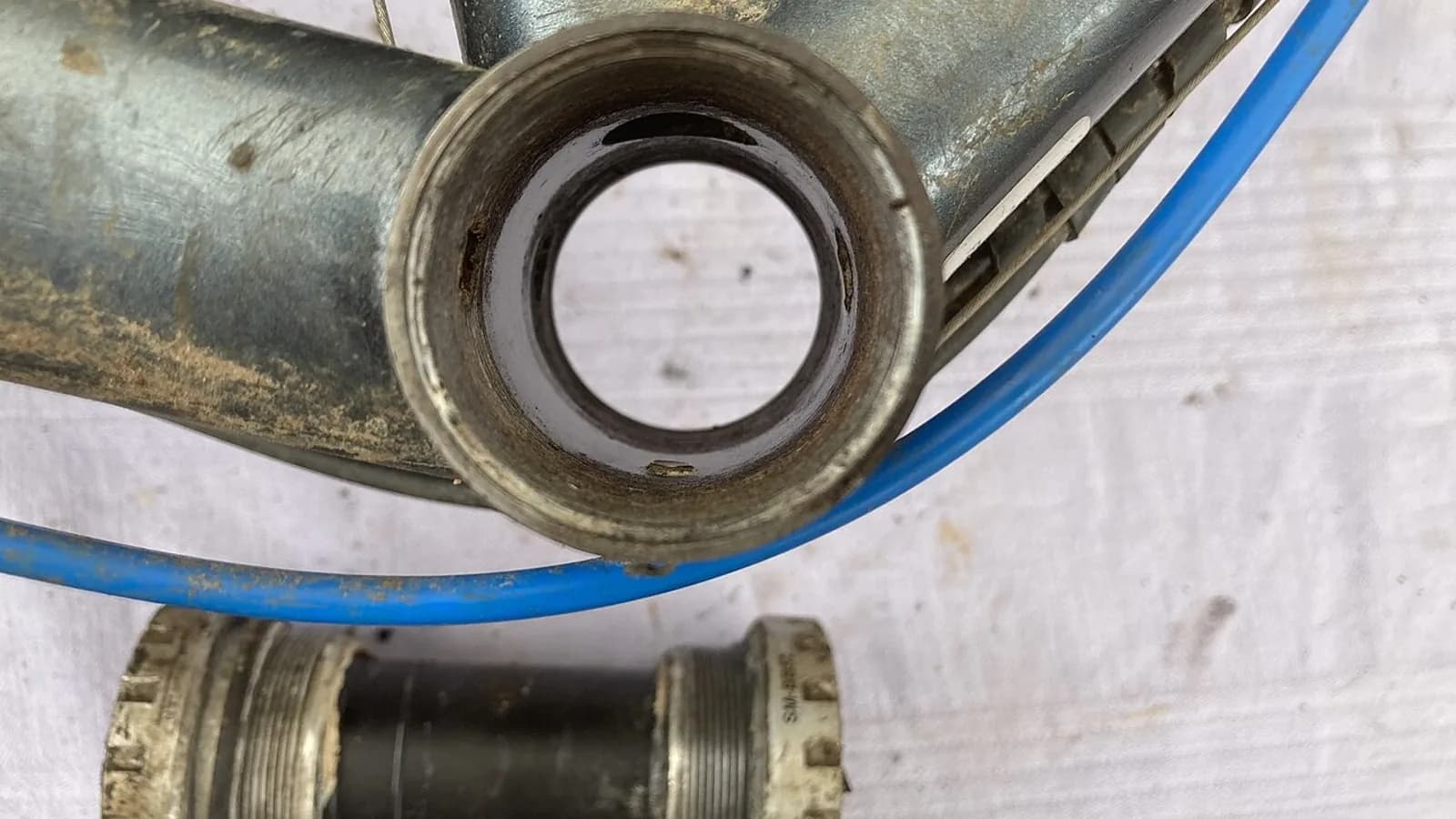

Choose a bottom bracket from both ends. It must fit the exact frame shell and support the exact crank spindle. Then the documented spacers, crank type, and chainline still need to match.
Use this order:
- Identify the frame shell.
- Choose a bottom bracket documented for that shell.
- Match the crank's exact spindle or spindle profile.
- Follow the manufacturer's spacer chart.
- Confirm crank type, chainline, and rear spacing.
If one of those facts is missing, you do not yet have a complete answer.
Start With the Frame Shell
The frame shell is the fixed boundary. Find its exact specification in the frame or complete-bike manual.
Record:
- whether it is threaded or press-fit
- the named shell standard
- shell width
- inner diameter for press-fit systems
- thread form for threaded systems
- any frame-specific restrictions
Names that sound similar can describe different interfaces. SRAM's current DUB documentation, for example, distinguishes 42 mm BB30 shells, 46 mm PF30 and BB386 shells, and 41 mm PressFit shells. It separately identifies English-threaded BSA, M47 x 1 T47, and 36 mm x 24 tpi Italian threads.
Those dimensions are examples of why the standard name matters. Use the current manual for your frame instead of identifying a shell from one measurement or a photograph.
Choose the Bottom Bracket for That Shell
The bottom bracket must explicitly support the frame shell's type and width.
A broad label such as “DUB bottom bracket” or “24 mm bottom bracket” is incomplete. The product family may contain separate versions for BSA, T47, BB30, PF30, BB386, or another shell. The sold package and cup arrangement can differ too.
Shimano's current product information lists recommended threaded and press-fit bottom brackets for exact crank families and supported shell widths. SRAM's DUB digital manual does the same through shell-specific bottom brackets and spacer charts.
Match the Exact Crank Spindle
Next, check what spindle the bottom bracket supports and what spindle the crank actually uses.
Record the spindle diameter, profile, and any relevant length or crank-type marking. Diameter alone can be insufficient. Some systems use asymmetric profiles, family-specific lengths, or different road, wide, MTB, and downhill variants under one broad name.
The useful question is not “Is this a 29 mm crank?” It is “Does this exact bottom-bracket fitment support this exact spindle profile in this frame shell?”
BikePartPicker keeps those facts separate for the same reason. A shared broad spindle value cannot override a profile or length conflict.
Use the Exact Spacer Chart
Spacers are part of the documented fitment. They are not a general-purpose way to rescue a mismatch.
The current SRAM DUB MTB chart changes spacer placement based on shell width, crank type, chainline, and rear hub spacing. Shimano dealer manuals likewise provide model-specific spacer arrangements for supported crank and shell combinations.
Follow the chart for the exact crank, bottom bracket, and frame shell. If the chart does not cover the combination, do not create a stack by borrowing instructions from a nearby model.
Required spacers can make a combination conditional until their presence and placement are confirmed. Missing instructions leave the result unknown.
Confirm Chainline and Crank Type
The spindle can pass through the bearings while the crank is still wrong for the drivetrain or frame.
Chainline is the lateral position of the chainring relative to the bicycle. Manufacturer charts may tie it to crank type, chainring offset, rear hub spacing, frame design, or front-derailleur requirements.
SRAM's DUB chart is a useful example. It uses frame shell facts together with crank type, chainline, rear spacing, and spacers. Shimano publishes separate crank, bottom bracket, and chainline compatibility tables for current families.
Check the exact system. Do not infer that two cranks with the same spindle diameter produce the same chainline.
Be Careful With Adapters
An adapter may be valid when its manufacturer documents the exact frame shell, bottom bracket or bearing arrangement, and crank spindle. It can also introduce new width, preload, clearance, or installation requirements.
Treat an adapter as another reviewed component in the chain, not as proof that any two endpoints now work together.
If the frame, crank, or adapter manufacturer does not document the path, BikePartPicker should not turn physical possibility into supported compatibility.
Which Bottom Bracket Do You Need?
- Get the shell type, width, diameter or thread, and restrictions from the exact frame manual.
- Choose a bottom bracket documented for that shell and width.
- Confirm the crank's exact spindle profile and supported bottom bracket.
- Follow the exact spacer chart for the selected parts.
- Verify crank type, chainline, rear spacing, and drivetrain support.
- Treat undocumented adapters and missing values as unresolved.
- Have a qualified mechanic confirm installation and safe operation.
You can browse bottom brackets and cranksets, then start a build with the frame shell established first. For the reasoning behind compatible, conditional, conflict, and not-yet-verified results, read How to Know if Bike Parts Are Compatible.